
Guide to Arkansas Divorce Records
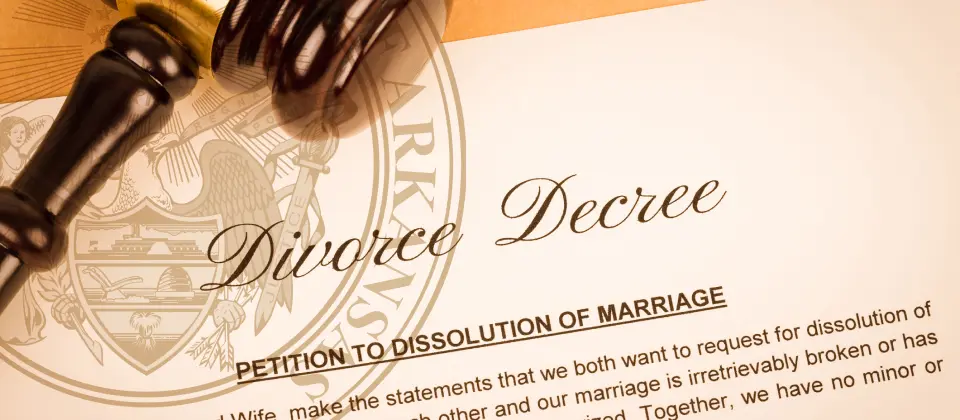
Every state has specific laws and record-access rules governing divorce. These rules define how the divorce process in the state works and how records generated from these proceedings are maintained.
In Arkansas, the divorce process starts with the filing of a complaint in the Circuit Court and ends with the issuance of a final decree. Once a spouse files in their county of residence, the court generates case files and documents that ultimately become part of the divorce record. These records serve both legal and administrative purposes.
Unlike marriage records, which are one-page documents that confirm a legal union between two people, divorce records are collections of documents that outline the terms of separation and confirm the end of the marriage.
A typical Arkansas divorce record includes the following information:
Full names of both spouses
The case number and filing date
The county where the divorce petition was filed
Name of the Circuit Court that handled the case
Date the divorce was finalized or granted
Details of rulings on property division, debt allocation, alimony, and child custody/support
Judgment type (contested or uncontested)
Arkansas maintains both physical and digital divorce records. Physical records are kept by the Arkansas Department of Health and County Circuit Clerks. Depending on the specific record you seek, you may visit or send a mail request to the state's health department or the appropriate Circuit Court Clerk's office.
On the other hand, digital records, including case information and some documents, are accessible online through the Arkansas Judiciary's CourtConnect system. However, full case files are only available in person at the Circuit Court where the case was handled.
Since divorce cases often involve matters such as property division and child custody, the information in the records varies from case to case. Understanding how divorce works in Arkansas helps explain which details appear in these records and how to retrieve them.
Where are Arkansas Divorce Records Stored?

Arkansas divorce records are maintained at the county and state levels. County-level divorce records include case files and divorce decrees. These records are maintained by the Circuit Court in the county where the divorce was finalized. You can access records through the office of the Circuit Court Clerk who handled the case.
At the state level, divorce records are maintained by the Arkansas Department of Health. These records typically state who is divorced, when, and where the divorce occurred. Unlike decrees or case files, divorce certificates serve only as official proof of a divorce. They do not contain the comprehensive details of the case.
Is Arkansas a 50/50 Divorce State
Arkansas follows a community property policy that allows all marital property to be shared equally between both parties. However, unlike most community property states, Arkansas permits Circuit Court judges to deviate from the 50/50 rule when an equal division is not fair and reasonable.
Arkansas courts typically consider the following factors when making property division decisions in divorce cases:
Duration of the Marriage - The length of the marriage affects how extensively assets and debts are shared. Shorter marriages may result in each spouse retaining more of what they individually brought into the relationship, while longer marriages generally lead to a more balanced, proportional division of property.
Amount and Sources of Income - Courts evaluate each spouse's current income and income sources. A spouse with significantly lower earning capacity may receive a larger share of marital assets to ensure a fair outcome and prevent financial hardship after divorce.
Contributions of Each Spouse - The court considers each spouse's contributions to the acquisition, preservation, and appreciation of marital property, including non-financial contributions such as homemaking.
Age, Health, and the Current Position of Each Party - Courts assess each spouse's age, health, and overall financial position. They also consider whether a spouse who relied on the other for financial support can realistically obtain employment after the divorce.
Types of Arkansas Divorce Records

In Arkansas, divorce records can be categorized into divorce certificates, divorce decrees, and divorce case files. Each record serves a distinct administrative or legal function. For example, if you need official proof that a divorce occurred, you may request a divorce certificate.
To review the court's rulings on matters like child custody, child support, alimony, or property division, the appropriate document to request is the divorce decree. A divorce decree is the court's final judgment and includes all binding decisions made during the divorce.
Similarly, if you want to review the complete history of the case, including every filing and hearing, you can request the divorce case file. This file contains all related documents, including complaints, summons, motions, and judgments.
Arkansas Divorce Certificate (Certificate of Divorce)
An Arkansas divorce certificate is a one-page certified document that identifies the individuals who divorced and states when and where the divorce occurred. These certificates are issued by the Department of Health's Vital Records Office.
Unlike a divorce decree, a certificate does not include the court's rulings on issues such as property division, alimony, or child support. Instead, it is used for administrative purposes, including name changes, name change applications, identification, and genealogical research.
Although divorce case files are generally public records, state law restricts public access to divorce certificates less than 100 years old. Only the individuals named on the certificate, their spouse or registered domestic partner, their descendants, parents or guardians, or their authorized attorney may obtain a copy.
Divorce Decree (Final Judgment of Divorce)
An Arkansas divorce decree is the final court order that legally dissolves a marriage and sets out all judicial rulings made during the divorce proceedings. Once signed by a judge and filed with the court, the decree becomes a legally binding order enforceable against both parties.
The Circuit Court in the county where the divorce was filed issues the decree. A typical Arkansas divorce decree includes rulings on:
Property and Debt Division - Specifies how marital assets and debts are allocated between the spouses.
Alimony - This includes details of any spousal payments the court grants to either party. It contains the type of payment, amount, and duration of spousal support.
Child Custody and Support - If the couple has a minor child, the decree outlines custody arrangements, visitation schedules, and child support obligations.
Final Judgment Date - The date the judge signs the decree, which also marks the official dissolution of the marriage.
Divorce Case File
An Arkansas divorce case file includes all documents created and received by the Clerk of the Circuit Court during divorce proceedings. It contains the initial complaint for divorce, summons, answers, motions, temporary orders, financial disclosures, parenting plans, and the final decree. While a divorce decree is a court order, a divorce case file simply provides a comprehensive account of the case from the initial complaint to the final judgment.
Divorce case files are maintained at the Circuit Court in the county where the divorce was filed. They may be viewed in person at the courthouse that handled the case.
How to File for Divorce in Arkansas (Step-by-Step)
Arkansas has residency requirements before the commencement of a divorce action and issuance of the final decree. To obtain a divorce in Arkansas, either the plaintiff or the defendant must have lived in the state for at least 60 days before the case is filed. In addition, the spouse must have been a resident for three months before the court issues the final divorce decree.
Another key factor to consider before filing is whether the divorce will be contested or uncontested. The type of divorce directly affects how expensive, how complicated, and how long the process takes.
Uncontested Divorce - An uncontested divorce occurs when you and your spouse agree on all terms. This simply means that both parties agree on key issues such as property division, child support, and alimony. Arkansas courts do not require a hearing in many uncontested cases. In some situations, a judge may allow the case to proceed without an in-person hearing by relying on affidavits, which are sworn written statements.
This process is sometimes referred to as a “divorce by affidavit” or a “divorce by deposition.” Local court rules vary across the state, so you should contact the Circuit Court where you plan to file to confirm whether the judge allows this process and what specific requirements apply.
Contested Divorce - A contested divorce is when you and your spouse disagree about the divorce or its terms. As a result of the disagreement, the judge may need to hold a court hearing to decide the issues.
If you meet Arkansas's residency requirement and have determined the type of divorce that applies to your situation, you may proceed with the filing steps outlined below.
Step-by-Step Divorce Process
Each Circuit Court in Arkansas has specific local rules that apply to divorce cases. As such, it is always a good idea to consult the Clerk of the Circuit Court in the county where you plan to file to determine the applicable procedures. In general, the divorce process in Arkansas depends on whether the case is contested or uncontested and whether the couple has minor children.
Prepare the Filing Packet
This is the critical step where you gather, complete, and organize the initial legal documents required by the Circuit Court to officially begin the dissolution of the marriage.
Identify the Divorce Path (1A vs. 1B) - This is where you decide if the divorce will be contested or uncontested.
Prepare the Required Documents - Assemble the following documents:
Complaint for divorce - This is the first document you must file with the Clerk of the Circuit Court. Filing this complaint officially begins the divorce process. In the form, you must provide basic information about the marriage, the grounds for divorce, and the relief you are requesting. The document must be signed.
Domestic Relations Cover Sheet - Arkansas law requires the submission of detailed information about the case, including key issues such as the existence of property, child custody and support, and visitation. This document helps classify the case type and is filed alongside the complaint.
Confidential Information Sheet - This is typically filed alongside the initial complaint for divorce to ensure that sensitive details are protected from the beginning of the case.
Child Support Worksheet - This document provides detailed financial information of both parties and the cost of the child's welfare. It is used to calculate child support.
Any other required forms are determined by the type of divorce being filed. You can access them through the Arkansas Judicial website.
Filing Fees and Fee Waivers - When filing a divorce complaint with the Clerk of the Circuit Court, you are required to pay a filing fee. Each County Circuit Court sets its own fee schedule, which generally ranges from $165 to $185. To confirm the exact amount, you should contact the Clerk of the Circuit Court in the county where you plan to file. If you are unable to afford the fee due to low income, you may petition the judge to waive the filing fee.
File the Case
After preparing your paperwork and paying the required filing fee, you must follow certain steps to file your divorce case:
Where to File - The paperwork must be filed with the Circuit Court in the county where either spouse lives or where the defendant resides.
Filing Methods - You can file your completed paperwork using any of these methods based on your preference and availability:
In person - You can visit the Circuit Court Clerk's office to submit all the required documents and appropriate fees in person.
Mail - If the county Circuit Court Clerk's office allows mail-in submission, submit the appropriate forms and proof of filing fee payment by mail.
Electronic Filing (eFiling) - Some counties now offer electronic filing for divorce cases. You may file the case electronically if the county's local court system supports e-filing.
What You Receive - Regardless of the filing method, you will receive the following information showing that your divorce case has been filed in Arkansas:
Assigned a case number to help you track the divorce case
The name of the judge who will handle the case
Summons if the divorce is a contested case
Initial court notices or scheduling information
Service of Process (Primarily for Contested Cases)
Under Arkansas law, you must notify your spouse once you have filed a divorce complaint. This notification is called service of process. Service may be carried out through a private process server, the county Sheriff's Office, or by certified mail.
The person who serves the papers must file proof of service with the Clerk within the time allowed for the recipient to respond to the summons. Proof of service is usually created by completing a certificate of service attached to the summons. If someone other than a sheriff or deputy performs the service, the certificate must be sworn.
When service is made by mail or a delivery company, the server must attach a return receipt, envelope, affidavit, acknowledgment, or other acceptable document.
If you can not find your spouse to serve them, you may ask the court for permission to use service by publication. This method allows you to notify your spouse through a newspaper or another approved public notice.
Early Case Phase and Temporary Orders
In Arkansas, the early phase of divorce is designed to help both parties identify and narrow the issues in dispute and resolve some before trial. One of the most important aspects of this stage is discovery. Discovery allows parties in a divorce to exchange information, documents, and evidence necessary to divide property, determine support, and resolve child custody issues. This is the foundation for establishing temporary orders.
These orders, which address issues such as temporary child custody, support, and property possession, rely on evidence gathered during discovery to demonstrate to a judge what is necessary to maintain the status quo pending the divorce.
During this early phase, both spouses can take steps to manage immediate needs, including:
Exchange financial records to define the scope of the case.
File motions for temporary orders when immediate needs arise.
Gather evidence to show the court your need for temporary relief. Evidence could include deeds (for property or marital home), pay stubs (for support), and school records (for custody).
After mediation, the judge may hold a hearing to determine whether to issue temporary orders, which may include:
Temporary child or spousal support
Exclusive use of marital property, such as the marital home
Child custody and visitation arrangements
Restraining or protective orders when safety is a concern
Financial Disclosures and Discovery
Financial disclosure is a mandatory process that requires both parties to provide a comprehensive, sworn account of their financial standing to ensure an equitable division of property and appropriate support awards. During this stage, each party must make full and honest disclosures.
Below are essential elements of financial discovery in an Arkansas divorce case:
Mandatory Disclosure - Both spouses must provide an Affidavit of Financial Means. This is a six-page sworn statement that explains income, monthly expenses, assets, and debts. If a spouse is employed, they must attach their last three pay stubs to the affidavit. A self-employed spouse must attach their last two federal and state tax returns with all schedules. The affidavit must be notarized. Parties must exchange this notarized affidavit at least 3 days before any court hearing where financial matters, such as child support or alimony, are at issue.
Discovery Tools - In contested divorce cases in Arkansas, different tools can be used to gather financial information. These tools help the court make fair decisions about alimony, property division, and other issues:
Request Documents - Ask the other spouse for records such as tax returns, pay stubs, or bank statements.
Interrogatories - Send written questions that must be answered under oath.
Subpoenas: Get financial information from third parties such as banks, employers, or retirement plan administrators.
Depositions: Take sworn testimony in person, outside of court, to gather additional details.
Case Management and Court Conferences
In Arkansas, a case management conference is the initial hearing where the judge, attorneys, and parties meet to review the issues in the divorce case. The purpose of this conference is to ensure the case progresses efficiently. During the hearing, the judge will identify the matters on which the parties agree, the issues in dispute, and whether there is potential for a quick settlement.
Based on this discussion, the judge will determine how best to move the case forward. At this stage, the court also has discretion to take additional actions, such as:
Establishment of deadlines for discovery, expert evaluations, and any needed depositions.
Mandatory mediation is ordered to help the parties work through complex matters, including child custody.
Issuance of temporary orders to address immediate concerns, including alimony, possession of the marital residence, and temporary child support.
Settlement or Trial
In Arkansas, divorce cases may be resolved either through settlement or trial. Most courts typically recommend settlement because it is faster, less expensive, and more private. Settlement options include:
Negotiating directly with your spouse
Participating in mediation with a neutral facilitator
Attorney-led settlement discussions
Signing a marital settlement agreement
If a settlement is not achieved, the case proceeds to trial. You can expect the following to happen at trial:
Evidence and witness presentation
Submission of proposed findings and judgments by each side
The judge will issue rulings on all unresolved issues and determine the equitable distribution of marital property
Judgment, Waiting Periods, and Finalization
Arkansas has a mandatory waiting period in a divorce case:
The 12-month Waiting Period - In Arkansas, parties seeking a divorce must live separately for at least 12 months before a decree can be issued. The 12-month separation period may begin before the divorce action is filed, during the proceedings, or before the final judgment is entered. This requirement cannot be waived by either party to the divorce.
Child Custody and Child Support in Arkansas Divorces
When a divorce involves a minor child, the court prioritizes the child's stability and well-being. Matters involving child support and custody are handled separately from the division of marital property.
In Arkansas, custody determinations must be based on the child's best interests. To evaluate those interests, the court may consider factors such as:
The child's preference, depending on maturity and age
Each parent's ability to provide physical care and satisfy emotional needs
The age, sex, and health of the child and parent
Legal Custody vs. Physical Custody
In Arkansas, child custody may be legal or physical, and parents may share one or both types depending on the circumstances. Joint legal or physical custody may be awarded when both parents agree to the arrangement in a parenting plan and the court determines that it serves the child's best interests.
The presumption that joint custody is best for the child can be challenged if one parent does not request any form of custody or if both parents agree that only one parent should have custody.
Legal Custody - Grants a parent the authority to make major decisions regarding the child's education, healthcare, religious upbringing, and overall welfare. This authority is shared by both parents if the court grants joint custody.
Physical Custody - This refers to the child's daily living arrangements and care. Physical custody may be shared through a structured schedule or assigned primarily to one parent, depending on the child's needs.
Child Support Guidelines and Enforcement
Arkansas determines child support obligations using state-approved guidelines and a standardized child support calculator, which establishes a monthly amount based on the parents' combined net income. Child support in Arkansas also covers health insurance premiums, extraordinary medical expenses, and work-related childcare costs.
Once a child support order is issued, the obligation becomes legally enforceable. Arkansas employs several enforcement mechanisms to address nonpayment, including:
Mandatory wage withholding (automatic deduction from paycheck)
Driver's license or professional license suspension
Interception of federal and state tax refunds
Initiating court actions that may result in penalties, including fines or jail time
Property, Debt, and Alimony in Arkansas Divorces
During a divorce proceeding, the court must decide how to divide marital property and debts, and whether to award alimony.
Arkansas follows a 50/50 approach to marital property. However, unlike other community-property states, Arkansas allows judges to deviate from a 50/50 rule when an equal division would be unfair or unreasonable. When a court adopts an equitable distribution approach, it must explain the basis for its decision.
Marital property includes all income and assets acquired by either spouse during the marriage
Separate property consists of assets owned before the marriage or received individually as gifts or inheritance. Separate property is not divided in an Arkansas divorce, although it may be considered when determining alimony.
The court must also evaluate marital debt. Marital debt includes obligations incurred during the marriage for the benefit of both spouses, and in some cases, debts incurred after separation but before the divorce is finalized. When allocating debt, Arkansas courts consider factors such as:
Each party's ability to repay the debt
The spouse who incurred the debt, and for what purpose
Whether only one party or both spouses (or the marriage) benefited from the debt
The overall distribution of marital property
Alimony may also be awarded to provide temporary financial support before a spouse becomes self-sufficient. Common types of alimony in the state include:
Rehabilitative Alimony - Support designed to help a spouse gain skills or education needed to become financially independent.
Reorientative Alimony - This is a short-term, temporary financial support designed to help a lower-earning spouse adjust to a single-income lifestyle
Errors, Omissions, and Corrections in Arkansas Divorce Records
Divorce records may contain errors such as incorrect dates, misspelled names, missing information, or other clerical mistakes. If your Arkansas divorce certificate or decree contains an error, it should be corrected as soon as possible. Failure to correct these documents may render them unusable for identification, administrative purposes, or legal enforcement.
To correct a divorce certificate in Arkansas, contact the Arkansas Department of Health Vital Records Office by email or visit the office in Little Rock. You can send a copy of the certificate and the corrections you want made. A fee may be required.
To correct a divorce decree, you must return to the Circuit Court that issued the document. This usually involves filing a motion to correct clerical errors or requesting an amended decree if the mistake affects important terms. The judge will review your request and decide whether a correction is appropriate.
After the correction is approved:
The Arkansas Department of Health will issue an updated divorce certificate..
The Circuit Court Clerk's office in the county where the divorce was finalized will provide the updated decree.
How to Access Arkansas Divorce Records

You can access Arkansas divorce records online, in person, and by mail. The type of Arkansas divorce record you require determines where to look.
Online Access
Divorce Decrees - You can search for case information, including case filings, dispositions, judgments, and decrees, through the ARCourt portal using party names and case numbers.
Divorce Certificates - You can request Arkansas divorce certificates issued by the Department of Health online through the Office of Vital Records. Expect to pay $10 for each copy of your divorce certificate. However, for online orders through Vital Records, a $5.00 standard processing fee and a $1.85 non-refundable identity verification fee will be charged.
In-Person Request
Divorce Decrees - The Circuit Clerk's offices in the counties where Arkansas divorces are finalized are the official custodians of the full divorce decrees. To obtain copies of a final judgment of divorce in the state in person, visit the Circuit Court Clerk's office in the county where the process was filed and the divorce granted.
Divorce Certificates - You may order a certified copy of the divorce record by visiting the Arkansas Department of Health's vital records office at:
4815 West Markham St. Little Rock, AR 72205
Mail-in Request
Divorce Decrees - Contact the Circuit Court Clerk's office in the county where the divorce was finalized to confirm if they offer mail-in services for full divorce decree requests.
Divorce Certificates - You may order a certified copy of the divorce record by mailing in a completed application, alongside government ID and a check or money order to the Arkansas Department of Health:
Arkansas Department of Health - Vital Records, Slot 44, 4815 West Markham Street, Little Rock, AR 72205
Your application must include the names of both spouses, the county where the divorce was granted, the date of the divorce, and an explanation of why the record is needed. Although divorce case files are public records, Arkansas law restricts access to divorce certificates less than 100 years old. Copies may only be obtained by the parties named, their spouse or registered domestic partner, their descendants, parents or guardians, or their authorized legal representative.
Arkansas Courthouses That Handle Divorces
Before filing for divorce in Arkansas or seeking divorce records, it is important to understand which court has jurisdiction over these cases and where to file. Divorce matters are handled within a specific level of the state court system.
Court Authority for Arkansas Divorce Cases
Arkansas Circuit Courts have exclusive jurisdiction over divorce and related domestic relations matters. These cases, which may involve property division, child custody, and child support, are filed in the domestic relations division of the circuit court in the county where at least one spouse resides. If the spouses live in different counties, the case is generally filed in the county where the plaintiff spouse lives.
County-Based Filing
Divorce records are maintained at the county level. Therefore, identifying the correct county is essential when filing a divorce case or requesting copies of decrees. Generally, the case is filed in the county where the plaintiff lives. This means the divorce records will be available at the Circuit Court in the plaintiff's county.
Divorce certificates are not issued by the courts. You can obtain divorce certificates from the Arkansas Department of Health through its Vital Records Office. Here are places to find final divorce decrees for some popular Arkansas counties:
Pulaski County - Pulaski Circuit Court
Washington County - Washington County Circuit Court
Jefferson County - Jefferson County Circuit Court
Saline County - Saline County Circuit Court
Jurisdiction Basics
Arkansas law requires that divorce actions and related family-law matters be filed in the Circuit Court of the county where the plaintiff lives. Amendment 80 to the Arkansas Constitution establishes the Circuit Court's jurisdiction over domestic relations cases. These courts typically address issues such as the division of marital property, child custody and child support determinations, alimony awards, and matters involving domestic abuse.
Examples of Arkansas Circuit Courts
Each county in Arkansas is home to at least one Circuit Court. Here are examples of Circuit Courts in the state:
Pulaski County Circuit Court (6th Judicial District of Arkansas)
Washington County Circuit Court (4th Judicial District of Arkansas)
Jefferson County Circuit Court (11th Judicial District of Arkansas)
Saline County Circuit Court (22nd Judicial District of Arkansas)
Role of the Circuit Court Clerk
The Circuit Court Clerks play the following key roles in Arkansas divorce cases and records:
Accept divorce complaints and assign case numbers to each filing.
Issue court notices and summonses.
Maintain the official case files for all divorce matters decided in the circuit court.
Provide certified copies of divorce decrees and related orders to eligible individuals.
FAQ
Are Divorce Records Public in Arkansas?
No, in Arkansas, divorce certificates are not public information. Only parties named, their spouse or registered domestic partner, their descendants, or their authorized legal representative can access these records. However, divorce case files are generally open for public inspection and copying. You can obtain these records online via the ARCourt portal or at the Circuit Court location where the divorce was finalized.
What is the Difference Between a Certificate and a Decree?
An Arkansas divorce certificate is a document that confirms a divorce occurred. It usually includes the names of the parties, the date, and where the divorce was finalized. The state's Department of Health issues divorce certificates. On the other hand, divorce decrees are judicial rulings that outline the terms of the divorce. These documents are issued by circuit courts.
Do I Need to Know the County?
To find a divorce decree in Arkansas, you must first identify the county where the divorce was filed and granted. The decree is maintained by the Office of the Circuit Court Clerk in that county.
How Far Back Do Records Go?
Arkansas divorce certificates are available from January 1923 to the present through the Arkansas Department of Health. Records older than 1923 can be found at the Circuit Court where the divorce was originally filed and completed.
How Much Does it Cost?
A certified Arkansas divorce certificate costs $10. The cost of a divorce decree varies by county. You may contact the Circuit Court Clerk in the county where the divorce was finalized to confirm the fee.
Can I Search Arkansas Divorce Records for Free?
You can search Arkansas divorce case files for free. However, obtaining a copy of the divorce decree typically requires payment of a fee.
Table of Contents
- Where are Arkansas Divorce Records Stored?
- Is Arkansas a 50/50 Divorce State
- Types of Arkansas Divorce Records
- How to File for Divorce in Arkansas (Step-by-Step)
- Step-by-Step Divorce Process
- Child Custody and Child Support in Arkansas Divorces
- Property, Debt, and Alimony in Arkansas Divorces
- Errors, Omissions, and Corrections in Arkansas Divorce Records
- How to Access Arkansas Divorce Records
- Arkansas Courthouses That Handle Divorces
- FAQ